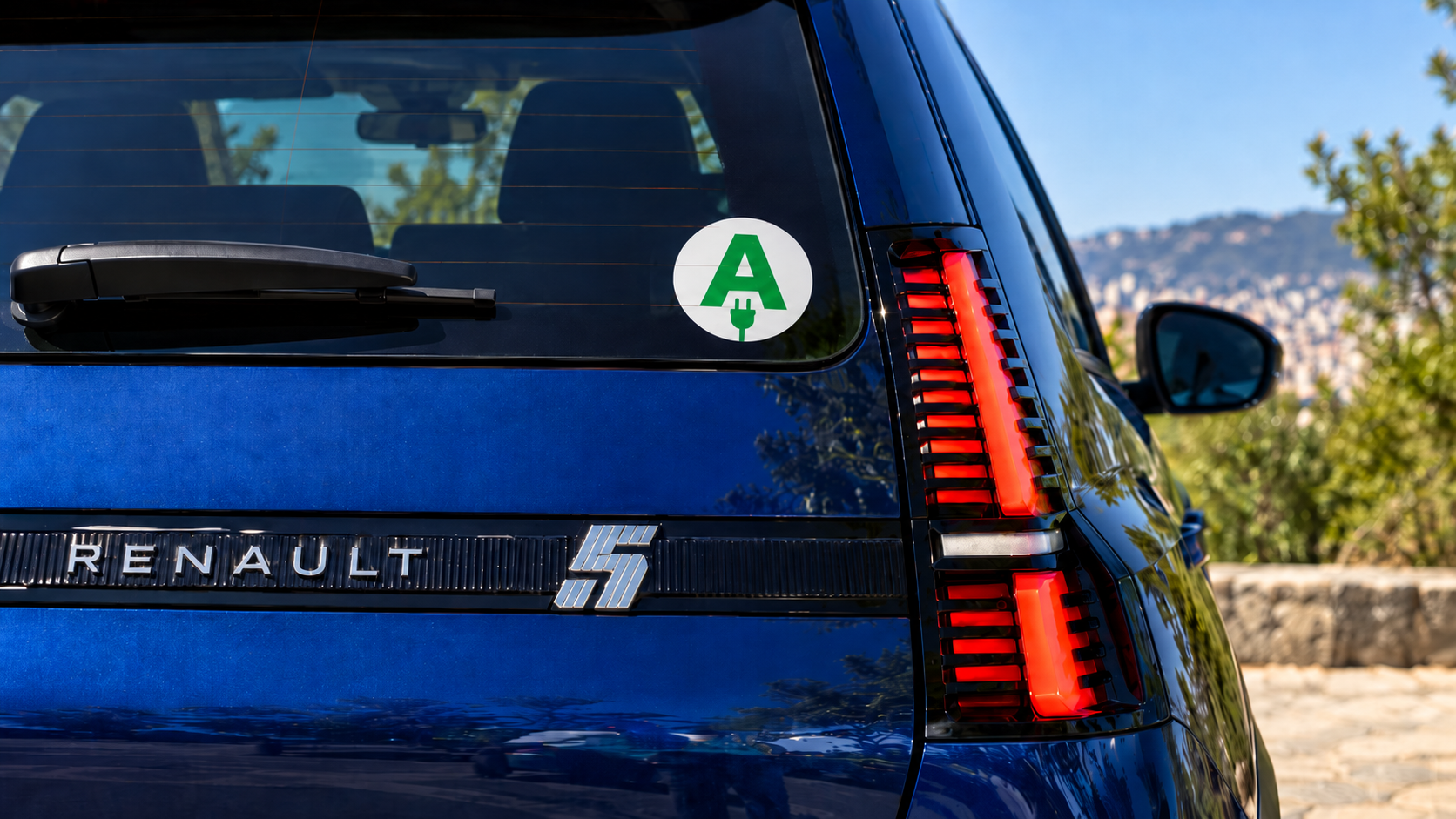
Sitting on the train, I check the app: my car isn’t charging. I need the battery topped up for the weekend, but when I get back to the car this evening, the charge level won’t have budged. I’d missed one of the little subtleties of living with an electric car. And it wasn’t even the first mistake I’d made with my Renault 5.
Switching to electric comes with plenty of small moments that keep you humble. For a Renault 5, it had to be five mistakes. Here they are.
A quick note for readers in the UK: I’m Belgian and live in Belgium, so my Renault 5 has its steering wheel on the left (the “wrong” side, I know) and it speaks French. That’s why the dashboard photos below show messages in French. I’ve translated them in the captions.
In short
- On the Renault 5 E-Tech, the gear selector sits right next to the wiper stalk: expect a few unwanted wipes during the first weeks.
- After unplugging, check the charging flap is closed before driving off.
- On the R5, the charging port is at the front: think about which way to park before pulling into a charging bay.
- With a home-charging cable, look at both plugs before unrolling it.
- Always check that charging has actually started before walking away.
1. Mixing up the gear selector and the wiper stalk
This is probably one of the most common criticisms from journalists who tested the car at launch. The British site Parkers, for example, points out that the gear selector, wiper and audio stalks are all clustered on the right of the steering wheel, making it easy to wipe the windscreen when you meant to select reverse. Well, I did exactly that, many times, during my first few weeks.
It’s true that the space to the right of the steering wheel is crowded. You’ll find the wiper stalk there (usually left in automatic mode), the audio remote control stalk (a Renault tradition for the past 40 years) and the gear selector, the latest arrival in the neighbourhood.
Still, after a few weeks, my hands found their way, and the three stalks no longer cause any trouble.
2. Forgetting to close the charging flap
Some people have driven off with the fuel flap open, or even with the fuel cap still sitting on the roof. That had never happened to me. I’d always struggled to see how it could, given that the fuel cap was locked with the car key, at least on the petrol and diesel cars I’d driven.
Yet charging an electric car changes your habits. You unplug the cable, put it away in the boot, then walk back to the driver’s seat. With a petrol car, by comparison, you stand right next to the fuel flap from start to finish.
I didn’t notice the difference… until the day a warning popped up on the dashboard. I was driving out of the car park where I’d just charged when I noticed a message on the driver display: charging flap open.
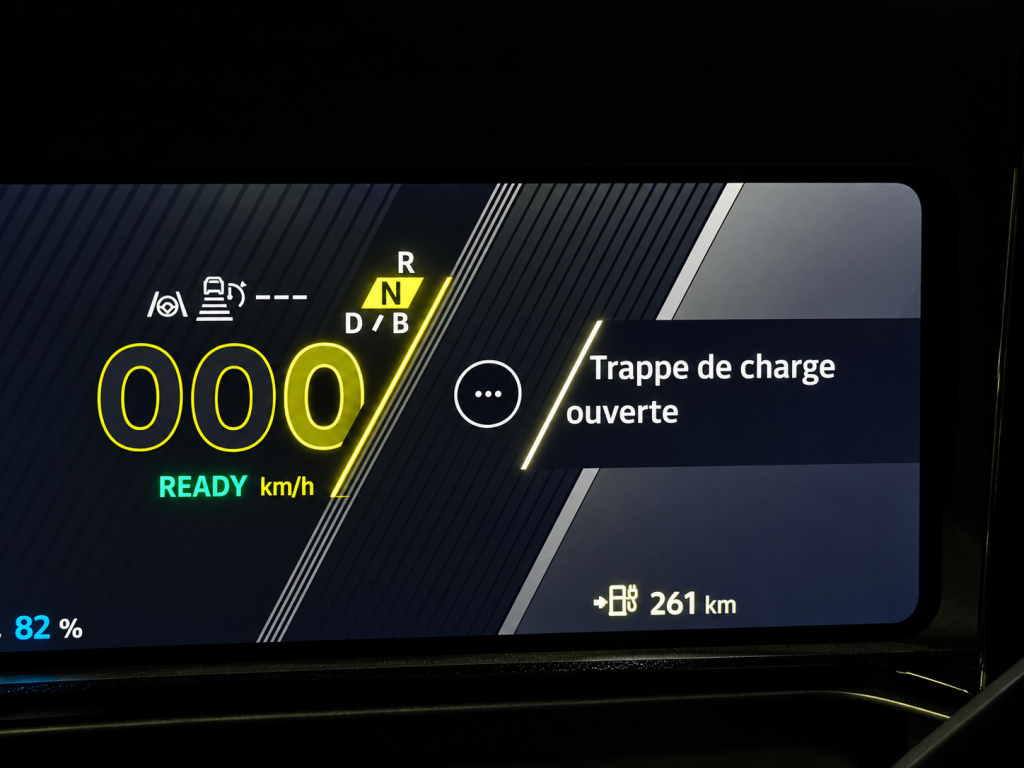
Here too, it’s a matter of habit. I got caught out once, and I’ve added a small extra check to my routine. It still takes no time at all.
3. Not knowing where the charging flap is
It’s a classic with petrol cars. You pull up at the pump and realise the fuel flap is on the wrong side. Or rather, you’ve picked the wrong side of the pump.
The problem is so common that carmakers came up with a fix. On your dashboard, the fuel pump icon has a small triangle on its left or right. It shows which side your fuel flap is on.
In electric cars, the small triangle sits to the left or right of the battery icon. But it’s more complicated than that. On a petrol car, there are mainly two positions: rear left and rear right. On an electric car, it’s no longer that simple. The port can also be at the front (left or right), or even on the front of the car. On the Renault 5, it’s at the front left.
And you rarely charge your car at stations laid out like petrol stations. Those are called drive-through stations, and they’re not very common for chargers. Fastned, for example, has some. Everywhere else, you charge in a parking bay, and the charger isn’t always in the same place.
During one charge at an Electra hub (a European fast-charging network present in ten countries, including France and the Benelux), the charger wasn’t at the far end of the bay but at its entrance, by the aisle. Without thinking, I drove in forwards: after years of petrol cars, my brain still assumes a car’s “plug” is at the back. The back of the car facing the charger was perfect… except that the R5’s flap is at the front left, so right at the far end of the bay. The cable was far too short to go round the car. I had to pull out and reverse in, so that the nose of the car, and therefore the flap, ended up next to the charger.
Since then, I picture the position of the flap much better. And as the miles go by, getting used to different kinds of stations replaces your old petrol-car habits with new reflexes. Before, you just picked the pump according to whether the flap was on the left or the right. Chargers aren’t as standardised as petrol stations, but it’s enough to keep the usual layouts in mind (charger at the far end of the bay, at the entrance, on the side, drive-through station) and choose which way to park accordingly.
4. Using the wrong end of the charging cable
Parking the car isn’t enough: you still have to plug it in. For rapid charging, no problem. The cable is attached to the charger. You just remove the little cover on the CCS socket, which Renault insists on fitting, and plug in.
For slow charging, there’s a small subtlety. The plug isn’t the same at both ends: one end goes into the car, the other into the charging point. Telling them apart first thing in the morning, in a dark car park, with the train about to leave, is a brand new skill to learn.
It’s the USB plug paradox all over again. It’s easy to plug in, but the laws of the universe mean you always try it the wrong way round first. Here, I often grabbed the wrong end to plug in one side. It works much less well that way.
I ended up looking at both plugs side by side every time, before unrolling the cable with each end on the side where it belongs.
5. Not checking that charging had started
Plugging in is one thing; being sure the car will actually charge is another. During my first few charges, as it was all new to me, I made sure charging had started. Then, as habit and confidence grew, I started skipping that step.
And that was bound to backfire. One day, I left the car charging in the station car park. But on the train, I realised something was wrong. Normally, the My Renault app (or its successor, My Rnlt, which is slowly rolling out) sends a notification that charging is under way. Not this time.
The reason? The app told me I had a charging schedule, and that charging would only start when the schedule said so. A charging schedule is normally there to take advantage of cheaper night-time electricity if you charge at home. But I charge exclusively on public chargers and had never set up a schedule. Once again, the mysteries of Renault’s software.
I couldn’t fix it remotely. When I got back from work that evening, the car had exactly the same charge as in the morning.
The fix? Make sure charging actually starts, by checking the indications in the car. After that, it’s too late. You’ll have lost a day.
Conclusion
These five stories might put you off switching to electric. “Not ready yet”, “not reliable enough”, you may be thinking. They shouldn’t. Whenever you switch to a newer car, you also have to change your habits. Every new car needs running in. What nobody tells you is that the driver does too.
Between two petrol cars, that “running in” is often barely noticeable. Between a petrol car and an electric one, the step is a bit bigger, and running in the driver becomes more tangible.
What about you? What mistake have you made with your EV?





Leave a Reply